
How To Weave Your Initials
This blog expands on Janelle’s How To Weave Diamond Twill tutorial by teaching you how to weave your initials into a piece of paper. This demonstration simply utilizes lined paper for convenience, however it is recommended to have two different color pieces of paper. With clear step-by-step instructions, diagrams, and tips, this guide ensures that even beginners can personalize their woven projects by adding their initials.
Step 1: Plan & Draft
On graph paper, draw a blocky version of your initials. Each square represents one warp thread (vertical) crossed by one weft pass (horizontal). Keep letters simple—like block capitals—since fine curves are difficult to achieve in weaving.

Using my initials (PN), you can see I made a grid and darkened my initials against it. Not including the dark columns on the left & right, the grid is 6 columns wide. This will be important for the next step.
Step 2: Prepare the Grid
We will now prepare the grid. Since I do not have an actual loom to use, I will simply cut pieces of lined paper for this demonstration.
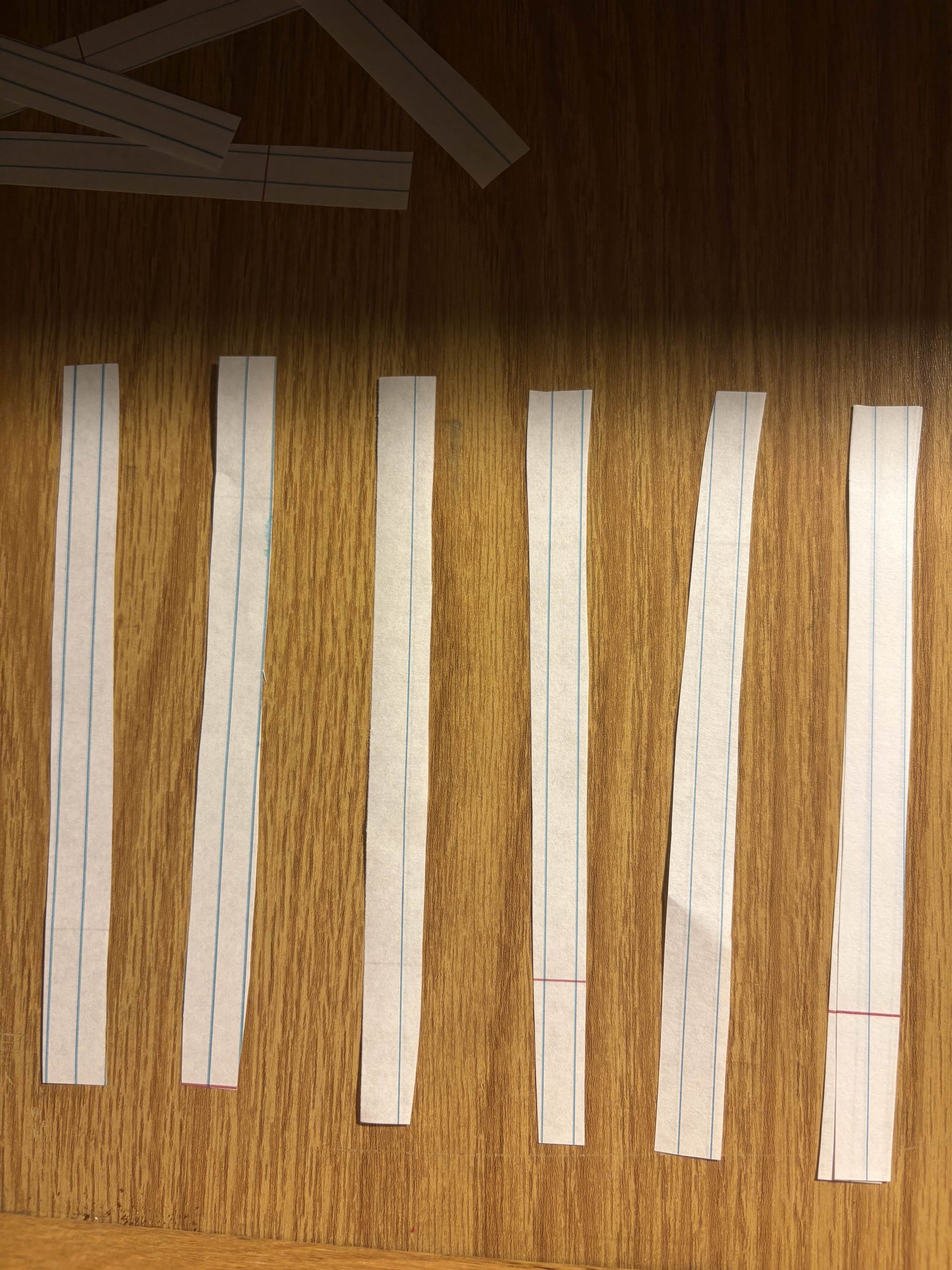
As you can see, there are six lines of paper layed across the desk, because we had six columns in the draft.
Step 3: Weave & Tape
Now comes the tricky part of the demonstration. We must now construct the initials by weaving other strips of paper between the grid lines we have laid out. To do this, put the strip of paper either under or over the grid line. If the box is white on the draft, then you lay it under the grid line. If the box is darkened on the draft, then you lay it over the grid line.
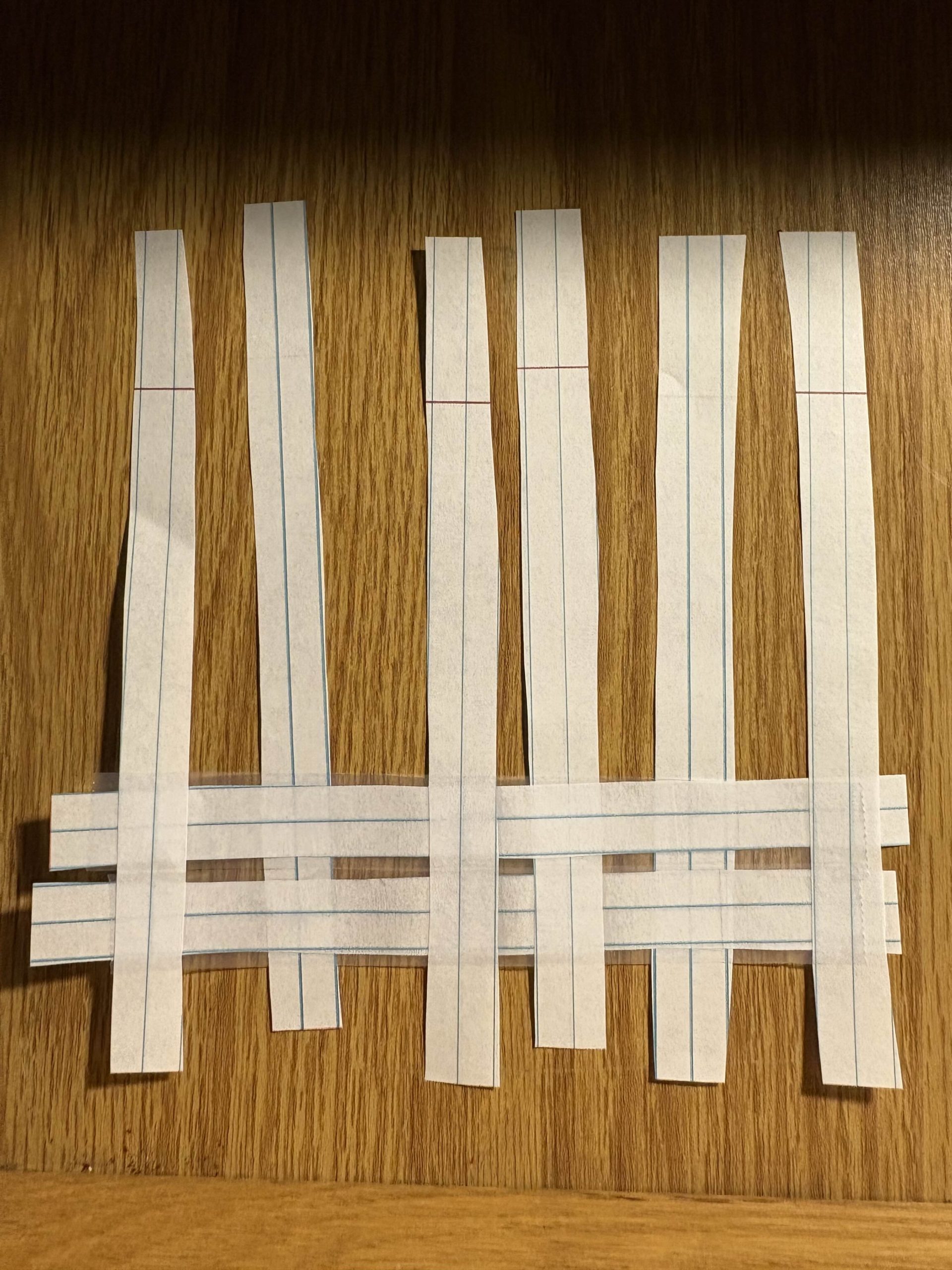
As you can see, once the strip is fully weaved between the grid lines, lay a piece of tape over to keep it in place.
Step 4: Finalize Loom
Simply repeat this process until the letters are complete. Since the length of the paper was not large enough to contain both letters, I made two weaves for entire initial separately.
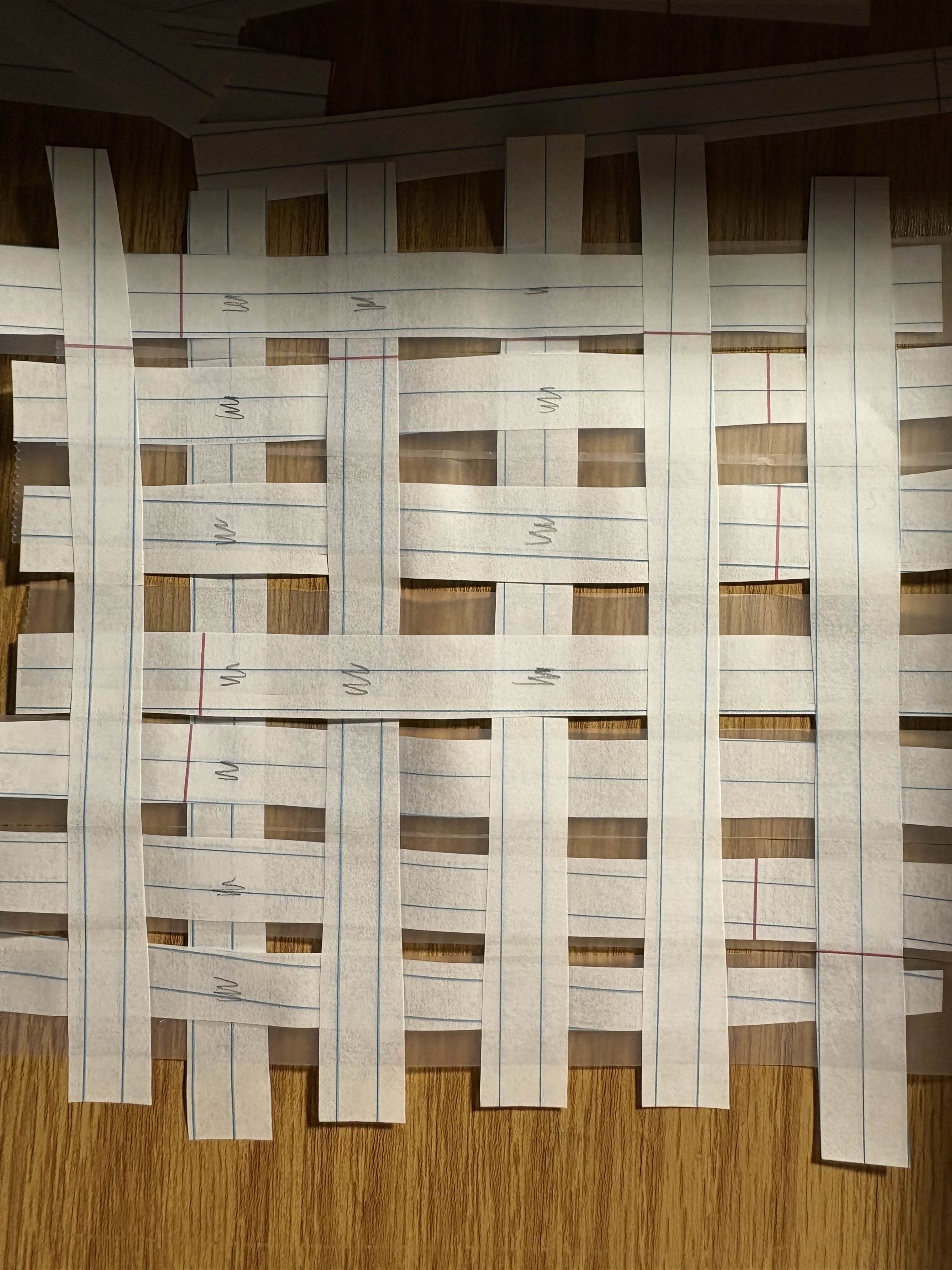
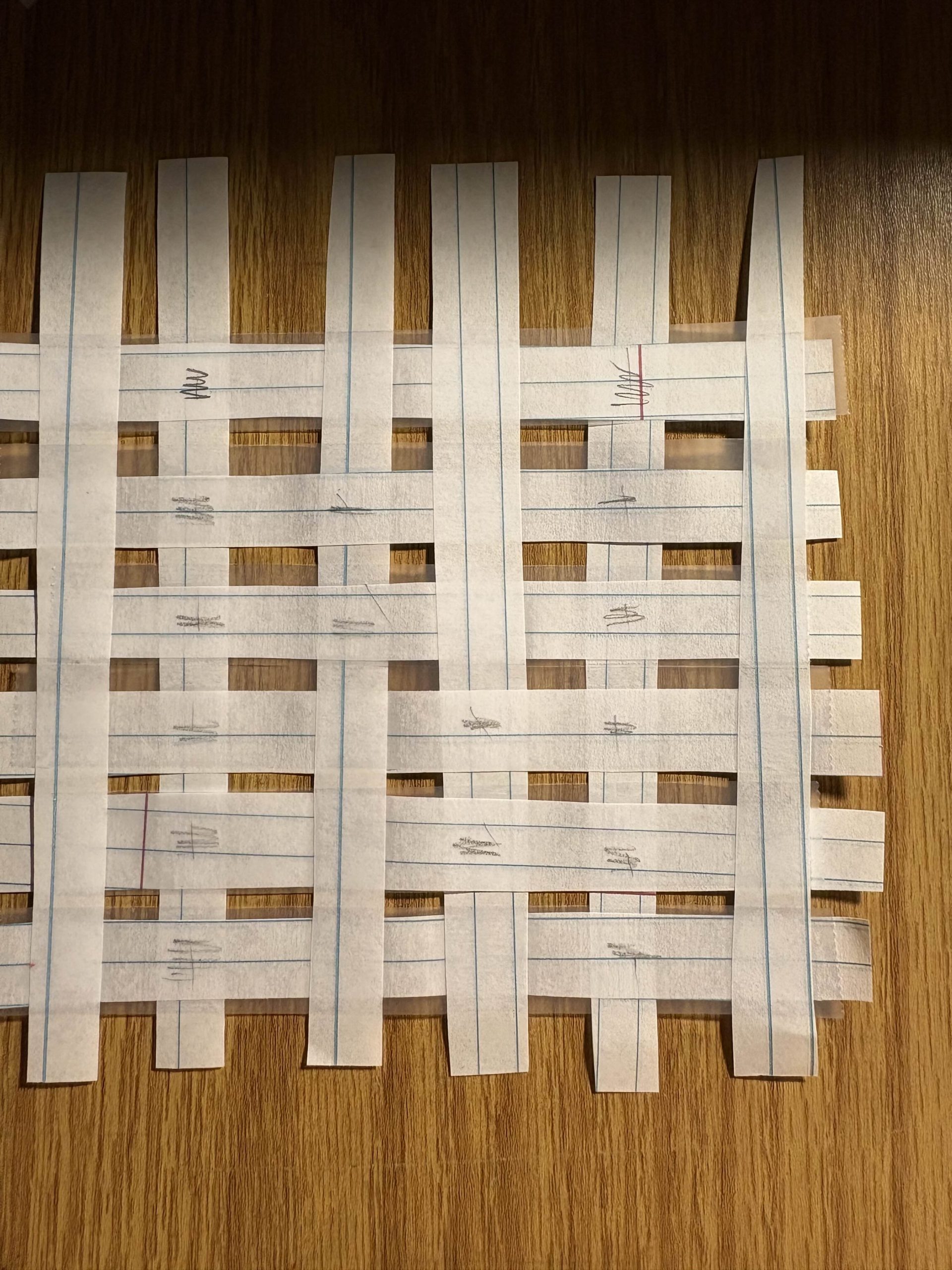
The over-strips have been darkened to highlight the initials appearance. Now you know how to weave your initials with Jacquard’s Loom!
This article was written with the assistance of OpenAI’s GPT-5